 By Owen Palmer
Quick answer
Our overall pick is the Feitore Deer Fence Netting for its large coverage, included installation accessories, and durable 3/4″ mesh. Other picks are better suited for ultra-fine insect barriers or covering specific raised bed sizes.
When birds, deer, or insects threaten your harvest, garden netting is a physical barrier that can protect your plants. The best garden netting for your plot depends on the pests you’re keeping out and the size of the area you need to cover. We compared manufacturer listings for several widely available options to help you find the right fit.
Our picks at a glance

Pros
- Large 7x100 ft coverage
- Includes 10 stakes and 50 zip ties for installation
- Durable, UV-resistant polypropylene material listed
- 3/4" mesh designed to be safe for animals
Cons
- Large roll may be overkill for very small gardens
- The listing does not mention protection against very small insects

Pros
- Ultra-fine 0.04" mesh for insect protection
- Two-pack provides versatile coverage
- Lightweight and see-through material listed
- Allows air, water, and light through
Cons
- Smaller total area than some single-roll options
- Securing with "heavy stuffs" may be less secure than stakes for some setups

Pros
- Long 100-foot length
- Reinforced edges for durability listed
- UV-resistant and reusable material
- 3/4" square mesh for easy handling
Cons
- The listing does not include installation accessories
- Mesh size is too large to stop small insects

Pros
- Ultra-fine mesh for small pest protection
- Lightweight for direct plant covering
- Waterproof and sun-proof material listed
- Easy to cut and secure with stones or soil
Cons
- Smaller 8x24 ft size
- The listing does not mention included stakes or fasteners

Pros
- Large 10x50 ft single-piece coverage
- Dense 0.8mm mesh for insect protection
- Stabilized PE material for longer use listed
- Transparent for monitoring plant growth
Cons
- The listing does not mention included stakes or fasteners
- Single piece may be harder to manage than a two-pack for some layouts
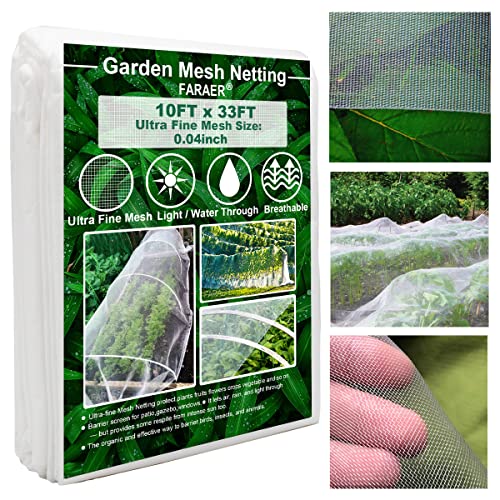
Pros
- Ultra-fine mesh for pest protection
- Oblong hole design for air and water flow listed
- Stabilized PE material for durability
- Large 10x33 ft size
Cons
- Only one piece in the pack
- The listing does not mention included installation hardware
How we chose
We compared manufacturer listings and specifications on Amazon as of October 2026. We did not test these products hands-on. Our selections are based on comparing listed features like mesh size, dimensions, included accessories, and stated durability.
Best Garden Netting: our picks in detail
1. Best overall: Feitore 7x100ft Deer Fence Netting
The Feitore Deer Fence Netting offers a large 7-foot by 100-foot roll of black polypropylene netting with a 3/4-inch square mesh. The listing states it is designed to be tough, reusable, and resistant to UV rays and rot. This best garden netting kit includes 10 installation nails and 50 cable ties for setup.
According to the listing, the mesh size aims to protect plants like tomatoes, strawberries, and blueberries from deer and birds without harming animals. It can be cut to size and is also suggested for use as chicken or pond netting.
Best for: This is the best garden netting for large gardens needing a versatile, long-lasting barrier against deer and birds.
Pros
- Large 7×100 ft coverage
- Includes 10 stakes and 50 zip ties for installation
- Durable, UV-resistant polypropylene material listed
- 3/4″ mesh designed to be safe for animals
Cons
- Large roll may be overkill for very small gardens
- The listing does not mention protection against very small insects
2. Best for insect and pest barrier: RIFNY 2-Pack 10x33ft Ultra Fine Mesh
The RIFNY Garden Netting comes as a two-pack, with each piece measuring 10 feet by 33 feet. It features a very fine 0.04-inch mesh, which the listing says blocks insects while allowing light, air, and water to pass through. The material is a stabilized PE mesh.
This white netting is described as lightweight and see-through, allowing you to monitor plant growth. The listing suggests it can be secured with stones, soil, or stakes and cut to the required size.
Best for: This is the best garden netting for creating a barrier against small insects like mosquitoes while covering plants.
Pros
- Ultra-fine 0.04″ mesh for insect protection
- Two-pack provides versatile coverage
- Lightweight and see-through material listed
- Allows air, water, and light through
Cons
- Smaller total area than some single-roll options
- Securing with “heavy stuffs” may be less secure than stakes for some setups
3. Best heavy-duty roll: POYEE 7.5x100ft Heavy Duty Bird Netting
The POYEE Bird Netting is a 7.5-foot by 100-foot roll of black netting with a 3/4-inch square mesh. The listing describes it as heavy-duty, UV-resistant, and reusable, with reinforced edges for strength. It is designed to protect fruit trees and plants from birds, squirrels, and deer.
Like other square mesh nets, the listing states it allows sunlight and rain through and is meant to be safe for wildlife. It can be cut to size and used for various fencing purposes.
Best for: This is the best garden netting for those who need a long, heavy-duty roll for fruit trees or large garden perimeters.
Pros
- Long 100-foot length
- Reinforced edges for durability listed
- UV-resistant and reusable material
- 3/4″ square mesh for easy handling
Cons
- The listing does not include installation accessories
- Mesh size is too large to stop small insects
4. Best for small raised beds: SnugNiture 8x24ft Ultra Fine Mesh Cover
The SnugNiture Garden Netting is a single 8-foot by 24-foot piece of white netting with an ultra-fine 0.1mm mesh. The listing says it is made of waterproof and sun-proof PE material. It is lightweight and see-through, designed to be laid directly over plants.
This cover is intended for protecting vegetables, fruits, and flowers from birds and squirrels. The listing states it allows water, sunlight, and air to pass through the mesh.
Best for: This is the best garden netting for covering a single small raised bed or a cluster of plants with a fine insect barrier.
Pros
- Ultra-fine mesh for small pest protection
- Lightweight for direct plant covering
- Waterproof and sun-proof material listed
- Easy to cut and secure with stones or soil
Cons
- Smaller 8×24 ft size
- The listing does not mention included stakes or fasteners
5. Best large fine-mesh cover: KLEWEE 10x50ft Garden Mesh Netting
The KLEWEE Garden Mesh Netting is a large 10-foot by 50-foot piece of white netting with a dense 0.8mm mesh. The listing states it is made of stabilized PE for durability and reusability. It is transparent and lightweight, designed to protect crops from birds, deer, and insects.
This netting allows sunlight, rain, and air to pass through and can be cut to size. The listing suggests using it to cover fruit trees, blueberry bushes, and vegetable gardens.
Best for: This is the best garden netting for covering a wide area like a large raised bed or several shrubs with a fine protective mesh.
Pros
- Large 10×50 ft single-piece coverage
- Dense 0.8mm mesh for insect protection
- Stabilized PE material for longer use listed
- Transparent for monitoring plant growth
Cons
- The listing does not mention included stakes or fasteners
- Single piece may be harder to manage than a two-pack for some layouts
6. Best two-pack alternative: FARAER 10x33ft Ultra Fine Mesh Netting
The FARAER Garden Netting is a 10-foot by 33-foot piece of white netting with a 0.8mm x 1mm ultra-fine mesh. The listing describes it as made from stabilized PE mesh, which is durable and reusable. It features an oblong hole design that allows air and moisture through.
This netting is intended for use in gardens and orchards to protect plants. It can be cut to size and secured over plants with stones, soil, or stakes.
Best for: This is the best garden netting for gardeners seeking a single, large piece of fine mesh for versatile crop protection.
Pros
- Ultra-fine mesh for pest protection
- Oblong hole design for air and water flow listed
- Stabilized PE material for durability
- Large 10×33 ft size
Cons
- Only one piece in the pack
- The listing does not mention included installation hardware
Our picks for the best garden netting at a glance
| Product | Size | Mesh Size | Key Features |
|---|---|---|---|
| Feitore Deer Fence Netting | 7×100 ft | 3/4″ square | Includes 10 stakes & 50 ties; UV-resistant |
| RIFNY Ultra Fine Mesh | 2-pack, 10×33 ft each | 0.04″ ultra-fine | Insect barrier; see-through |
| POYEE Heavy Duty Bird Netting | 7.5×100 ft | 3/4″ square | Reinforced edges; UV-resistant |
| SnugNiture Ultra Fine Mesh Cover | 8×24 ft | 0.1mm ultra-fine | Lightweight; waterproof |
| KLEWEE Garden Mesh Netting | 10×50 ft | 0.8mm ultra-fine | Stabilized PE; transparent |
| FARAER Ultra Fine Mesh Netting | 10×33 ft | 0.8mm x 1mm ultra-fine | Oblong hole design; durable |
How to choose the best garden netting
Selecting the right netting starts by identifying your primary garden pest. Larger mesh, around 3/4 inch, is effective for excluding birds, deer, and squirrels while still allowing pollinators access. For insects like cabbage moths or flea beetles, you’ll need an ultra-fine mesh. Always check that the listed material is UV-resistant to ensure it lasts more than one season.
Measure the area you need to cover, including height for trees or shrubs. A netting roll is versatile for custom cuts, while pre-sized pieces or multi-packs can simplify covering standard raised beds. Consider how you will secure it; some kits include stakes and ties, while others rely on you to use stones or existing posts.
What to look for
- Mesh Size: 3/4″ for birds and deer; ultra-fine (under 0.8mm) for insects.
- Material Durability: Look for UV-resistant, rot-proof materials like polypropylene or stabilized PE.
- Coverage Area: Choose dimensions that match your garden beds or trees with room to secure edges.
- Installation: Check if stakes, ties, or other fasteners are included for easier setup.
Proper installation is key to effectiveness and safety. Ensure the netting is taut to prevent animals from getting tangled, and secure all edges to the ground. For more on managing animal visitors, see our guide on common garden problems and solutions.
FAQ
What is the difference between bird netting and insect netting?
Bird netting typically has a larger mesh size (around 3/4 inch) designed to keep out birds and larger animals while allowing light and water through. Insect netting has a much finer mesh (often less than 1mm) that creates a barrier against small pests like beetles and moths.
Can garden netting harm wildlife?
Netting can pose a risk if animals become entangled. Choosing a netting with a square mesh (rather than a stretchy diamond mesh) and installing it tautly can reduce this risk. Always follow the manufacturer’s instructions for safe installation.
Do I need to remove the netting to water my plants?
Many nettings, especially fine mesh varieties, are designed to allow water to pass through. The listings for the products above state that you can water or apply liquid feed directly through the mesh without removal.
How long does garden netting last?
Durability depends on the material and exposure to weather. Listings for the nets we compared mention UV-resistant, rot-proof materials designed for multiple seasons of reuse when stored properly out of sunlight and humidity.
References
- Amazon product listings and manufacturer specifications (accessed October 2026)
About Owen Palmer
Owen Palmer is part of our editorial team and reviews and edits our plant care Q&A guides, checking product details against manufacturer specifications and owner feedback.