Quick answer
Our overall pick is the Burpee SuperSeed 36-Cell Tray for its flexible, pop-out cells that simplify transplanting. Other trays are best for gardeners wanting extra-large cells, a complete kit with a dome and light, or biodegradable pots for direct planting.
Starting seeds indoors gives your garden a head start, but the right tray can make all the difference. We compared manufacturer listings for the best seed starting trays to help you find one that fits your space and plants. Whether you need a simple windowsill tray or a full kit with a grow light, our picks are based on the features and specs provided by the brands.
Quick picks
- Best for easy transplanting: Burpee SuperSeed 36-Cell Tray (see on Amazon)
- Best all-in-one kit with light: Patigrow 60-Cell Self-Watering Kit with Light (see on Amazon)
- Best biodegradable pots: DANALLAN 20-Pack Biodegradable Pots (see on Amazon)
- Best for large seedlings: Burpee SuperSeed 16 XL Cell Tray (see on Amazon)
7 Best Seed Starting Trays compared
| # | Product | Best for | Material | Cell Count | Special Features |
|---|---|---|---|---|---|
| 1 | Burpee SuperSeed 36-Cell Tray | Best overall for flexible transplanting | Silicone cells, plastic tray | 36 cells | Flexible pop-out cells, labeled rows, included diagram |
| 2 | Burpee SuperSeed 16 XL Cell Tray | Best for seedlings needing more root space | Silicone cells, plastic tray | 16 cells | Extra-large cells, flexible pop-out design |
| 3 | Burpee SuperSeed Windowsill 8 XL Tray | Best for compact windowsill gardening | Silicone cells, plastic tray | 8 cells | Compact windowsill size, extra-large cells |
| 4 | MIXC 10-Pack 120-Cell Kit with Domes | Best multi-pack with humidity domes | Plastic | 120 cells (10 trays of 12) | Includes humidity domes, base trays, labels |
| 5 | Gardzen 30-Pack 6-Cell Trays | Best for bulk planting with simple drainage | Plastic | 180 cells total (30 trays of 6) | Drainage holes, guide channels, bulk pack |
| 6 | Patigrow 60-Cell Self-Watering Kit with Light | Best all-in-one system with integrated lighting | BPA-free PET dome and tray | 60 cells | Includes grow lights, self-watering system, dome, tools |
| 7 | DANALLAN 20-Pack Biodegradable Pots | Best for direct planting without disturbing roots | Biodegradable paper | 240 cells (20 packs of 12) | Direct-plant pots, includes small tools |
How we chose
We compared manufacturer listings and specifications on Amazon as of October 2026. We did not test or use any products hands-on. Our selections are based on comparing stated features like cell count, material, included accessories, and special systems for watering or transplanting.
7 Best Seed Starting Trays: our picks in detail
1. Best overall for flexible transplanting: Burpee SuperSeed 36-Cell Tray

Pros
- Flexible silicone cells pop out for transplanting
- Watering tray with drainage channels and spill containment
- Rows labeled for seedling identification
- Reusable and easy to clean
Cons
- The listing does not mention if it includes a humidity dome
- Hand wash only (implied by 'easy to clean')
The Burpee SuperSeed 36-Cell Tray is designed with flexible, food-grade silicone cells that gently pop out for transplanting, which the listing says helps reduce root stress. It includes a watering tray with deep channels to draw away excess water and a raised edge to contain spills.
Rows are labeled alphanumerically, and it comes with a Plant-o-Gram diagram for seedling identification. The listing states the trays are reusable and easy to clean after use.
Best for: Gardeners who want a reusable system designed to make transplanting seedlings easier and less stressful on roots.
2. Best for seedlings needing more root space: Burpee SuperSeed 16 XL Cell Tray

Pros
- 16 extra-large cells for more root space
- Flexible silicone cells for transplanting
- Corner slots for drainage and aeration
- Labeled rows with identification diagram
Cons
- The listing does not mention if it includes a humidity dome
- Fewer total cells than some trays
This Burpee tray features 16 extra-large cells, providing more room for seedling root development compared to standard cell sizes. It uses the same flexible, food-grade silicone material for gentle pop-out transplanting.
The design includes corner slots in each cell for drainage and aeration, and a watering tray with channels and handles. Like other Burpee trays, rows are labeled and it includes a Plant-o-Gram diagram.
Best for: Starting larger vegetable or flower seeds that benefit from deeper, wider cells for root growth.
3. Best for compact windowsill gardening: Burpee SuperSeed Windowsill 8 XL Tray

Pros
- Compact size designed for windowsills
- 8 extra-large flexible cells
- Smart watering system with drainage
- Labeled rows for identification
Cons
- Very low cell count
- The listing does not mention a humidity dome
Designed specifically for windowsills, this Burpee tray measures 11.5 by 5.2 by 2.2 inches and holds 8 extra-large cells. It incorporates the brand’s flexible silicone cell and smart watering system in a smaller footprint.
The listing states it is perfectly sized for starting seeds on a windowsill. It includes labeled rows and a Plant-o-Gram diagram for tracking seedlings.
Best for: Gardeners with limited space who want to start a few seeds on a sunny windowsill.
4. Best multi-pack with humidity domes: MIXC 10-Pack 120-Cell Kit with Domes

Pros
- Includes 10 humidity domes with adjustable vents
- 10 trays and base trays for many seedlings
- Comes with plant labels
- Drainage holes in trays
Cons
- Cells are smaller than extra-large options
- Made of plastic (some gardeners prefer other materials)
The MIXC kit includes 10 seed trays, 10 base trays, 10 humidity domes, and 10 plant labels. Each tray has 12 cells, for a total of 120 cells. The humidity domes have adjustable vents to regulate temperature and humidity.
The trays have drainage holes and are made of durable plastic described as reusable. The listing states the domes create a mini greenhouse environment.
Best for: Gardeners who need many cells for starting a large quantity of seeds and want the humidity control of included domes.
5. Best for bulk planting with simple drainage: Gardzen 30-Pack 6-Cell Trays
Pros
- 30 separate trays provide organizational flexibility
- Drainage holes and guide channels for watering
- Deep cells for root development
- Reusable plastic construction
Cons
- No humidity domes included
- Small cell count per individual tray
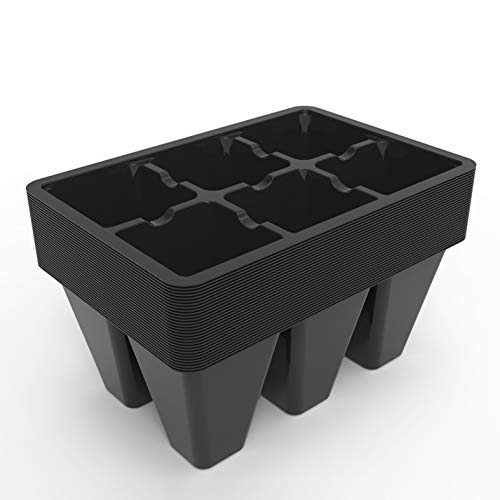
This Gardzen set includes 30 individual trays, each with 6 cells. The listing states each cell is 1.5 inches square by 2.2 inches deep. The trays have drainage holes and guide channels on top to help water reach every cell.
They are made from plastic described as premium and durable, and are noted as reusable and eco-friendly. The trays are a standard black color.
Best for: Gardeners who need a large quantity of simple, separate trays for organizing many different types of seeds.
6. Best all-in-one system with integrated lighting: Patigrow 60-Cell Self-Watering Kit with Light

Pros
- Includes LED grow lights with timer and brightness control
- Self-watering base tray with capillary mat
- Humidity dome with adjustable vents
- Comes with plant labels and small gardening tools
Cons
- Larger overall footprint
- More complex setup than basic trays
The Patigrow kit is a comprehensive system that includes a 60-cell tray, a self-watering base tray with a capillary mat, a humidity dome with adjustable vents, and two LED grow light strips. The lights have adjustable brightness and a timer.
The dome and base are made from BPA-free PET material. The listing states the self-watering system is designed to provide consistent moisture.
Best for: Beginners or gardeners who want a complete, self-contained seed starting station with built-in lighting and watering.
7. Best for direct planting without disturbing roots: DANALLAN 20-Pack Biodegradable Pots

Pros
- Biodegradable paper pots for direct planting
- Minimizes root disturbance during transplant
- Comes with tools (fork, dibble) and labels
- Large quantity of 240 total cells
Cons
- Pots are single-use and will break down
- The listing does not include a tray or dome for holding the pots
This DANALLAN set includes 20 packs of 12-cell pots, for a total of 240 individual biodegradable pots made from paper. The listing states they are thick and sturdy, and can be planted directly into soil.
The kit also includes a fork, a dibble, and plant labels. The pots are designed for seed germination and to minimize transplant shock.
Best for: Gardeners who prefer a no-transplant-shock method by planting the entire biodegradable pot into the garden.
How to choose the best seed starting trays
Selecting the right seed starting tray depends on your plants, space, and gardening style. The core function is to provide a supportive environment for germination and early growth before transplanting seedlings outdoors. Consider how many plants you’re starting and how much room their roots will need; larger vegetables often benefit from deeper cells.
What to look for
- Cell Size and Count: Match the cell depth and width to your plants’ needs. Extra-large cells suit tomatoes and peppers, while many small cells are efficient for herbs or flowers.
- Material and Durability: Trays are made from flexible silicone, rigid plastic, or biodegradable paper. Silicone and plastic trays are reusable, while paper pots can be planted directly.
- Watering and Humidity Systems: Look for features like drainage holes, watering trays, and adjustable humidity domes to help manage moisture, a common factor in seed starting mistakes.
- Transplanting Method: Flexible cells that pop out or pots that biodegrade in soil are designed to minimize root disturbance during transplant.
Finally, think about accessories. A basic tray works if you have a bright window, but a kit with a dome creates a humid microclimate, and one with a grow light ensures consistent illumination. For more on the fundamentals, see our guide on how to start seeds indoors.
FAQ
When should I start seeds indoors?
Timing depends on the plant and your local climate. Many seed packets provide guidance. Generally, you start seeds indoors weeks before your area’s average last frost date to give seedlings a long enough growing period. You can find your frost dates using resources like the USDA Plant Hardiness Zone Map.
Do I need a humidity dome for seed starting?
A humidity dome is not strictly necessary, but it can be very helpful. It helps retain soil moisture during the critical germination period, meaning you may not need to water as frequently. Many trays, like the MIXC and Patigrow kits, include domes with vents so you can control humidity levels as seedlings grow.
Can I reuse plastic seed starting trays?
Yes, most plastic and silicone seed trays are designed to be reusable. The listings for the Burpee and MIXC trays specifically mention they are easy to clean and store for the next season. Be sure to wash them thoroughly with a mild disinfectant to prevent the spread of disease between plantings.
What’s the advantage of biodegradable pots?
The main advantage of biodegradable pots, like the DANALLAN paper pots, is that you plant the entire pot in the ground. This means you don’t have to remove the seedling, which minimizes root disturbance and can reduce transplant shock. The pot will break down naturally in the soil over time.
References
- Amazon product listings and manufacturer specifications (accessed October 2026)
- Plant Propagation, Garden Talk Online
- How to Start Seeds Indoors and Outdoors, Garden Talk Online
- How to Transplant Seedlings Without Causing Shock, Garden Talk Online