 By Claire Whitaker
Updated November 2026
Finding the best potting soil for indoor plants comes down to matching the mix to your plants, your watering habits and the conditions in your home. Indoor containers dry out differently than garden beds, drain differently than in-ground soil, and rarely get the airflow a plant would have outdoors. The six mixes below were compared on the criteria that matter most for houseplants: drainage and aeration, moisture retention, organic content, whether fertilizer is included, and how well each mix suits common houseplant types such as foliage plants, succulents and tropical aroids. Specifications come from manufacturer listings and the patterns owners commonly describe, not from any testing on our end. You may also like 3 Best Indoor Hangers for Plants: Our Picks Compared.
Our top picks at a glance
- 1
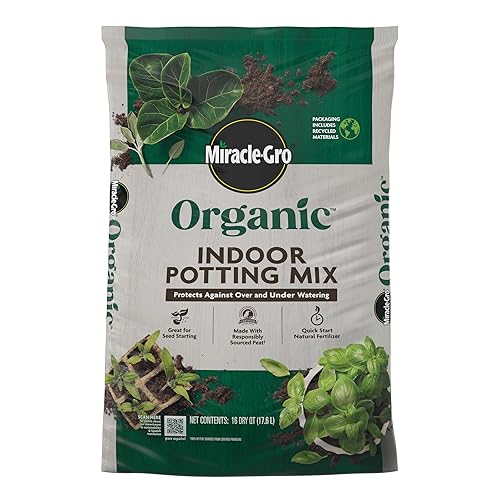 TOP CHOICEBest overallMiracle-Gro Organic Indoor Potting Mix, 16 qt.View on Amazon
- 2
 TOP CHOICEBest for organic growersBack to the Roots Organic Indoor Potting Soil, 6 QuartView on Amazon
- 3
 TOP CHOICEBest for aroids and tropicalsRosy Soil Peat-Free Houseplant Potting Mix, 4 QuartsView on Amazon
- 4
 Best for gnat controlMiracle-Gro Houseplant Potting Mix, 4 qt.View on Amazon
- 5
 Best for mixed indoor and container useBurpee Premium Organic Potting Mix, 9 QuartsView on Amazon
- 6
 Best for moisture controlMiracle-Gro Moisture Control Potting Mix, 8 qt. (2-Pack)View on Amazon
Our Top Picks
Before the individual reviews, here is how the six mixes line up. Each one fits a slightly different houseplant routine, so use the table to narrow the field before reading the details.
| Product | Best for | Key feature |
|---|---|---|
| Miracle-Gro Organic Indoor Potting Mix, 16 qt. | Most houseplants, first-time buyers | Moisture-balancing blend with feeding included |
| Back to the Roots Organic Indoor Potting Soil, 6 Quart | Organic-minded growers | Peat-free, 100% organic formulation |
| Rosy Soil Peat-Free Houseplant Potting Mix, 4 Quarts | Monstera, pothos and tropical plants | Biochar and worm castings |
| Miracle-Gro Houseplant Potting Mix, 4 qt. | Plants prone to fungus gnats | Perlite-based mix designed to resist gnats |
| Burpee Premium Organic Potting Mix, 9 Quarts | Indoor plants and outdoor containers | Coconut coir base, OMRI listed |
| Miracle-Gro Moisture Control Potting Mix, 8 qt. (2-Pack) | Growers who struggle with over- or under-watering | Moisture control formulation, two-pack |
Miracle-Gro Organic Indoor Potting Mix, 16 qt.
Protects Against Over & Under Watering, Planting Soil For Indoor Container Plants, Houseplants & Starter Plants, OMRI Listed Miracle-Gro Organic Indoor Potting Mix, 16 qt.
Best for: Most houseplants and first-time buyers who want one reliable all-purpose mix
This is a good starting point for someone who keeps a mix of foliage plants, flowering houseplants and small trees indoors and wants a single bag to cover them. The label describes a mix intended to protect against both overwatering and underwatering, which is the most common problem with containers in a heated home.
Key specs
- Packaging: 16 quart bag
- Listed as an organic indoor planting soil for container plants and houseplants
- Marketed for starter plants as well as established houseplants
Pros
- Designed to balance moisture so roots are less likely to sit in soggy mix or dry out too fast
- Broadly suitable for many common houseplant types
- Large bag size covers repotting several plants at once
Cons
- Some owners find it heavier and denser than lighter aroid-specific mixes
- May need supplemental feeding over the longer term for heavy feeders
Bottom line: A sensible default for a mixed collection of houseplants if you want one bag that covers most needs.
Back to the Roots Organic Indoor Potting Soil, 6 Quart
Indoor potting mix and houseplant soil for pothos, monstera, ferns and more; peat-free, 100% organic, made in the USA Back to the Roots Organic Indoor Potting Soil for Indoor Plants, 6 Quart
Best for: Organic-minded growers who want a peat-free indoor mix for pothos, monstera, ferns and similar plants
Buyers who prefer to avoid peat and synthetic additives tend to gravitate toward this mix. The listing emphasizes a peat-free, fully organic formulation made in the USA, and it targets a broad range of popular houseplants rather than one narrow group.
Key specs
- Packaging: 6 quart bag
- Peat-free, 100% organic formulation
- Listed for pothos, monstera, ferns and other common houseplants
Pros
- Peat-free and organic, which suits growers with sustainability priorities
- Suitable for a wide range of common houseplants
- Smaller bag makes it practical for a few pots or a single repotting session
Cons
- Smaller bag size can be costly per quart for large collections
- Organic mixes can break down over time, so plan to refresh the soil periodically
Bottom line: The right choice for someone who wants a peat-free, organic mix for a modest number of houseplants.
Rosy Soil Peat-Free Houseplant Potting Mix, 4 Quarts
Biochar and Worm Castings, for Monstera, Pothos, Tropical Indoor Plants, Peat Free Rosy Soil Houseplant Potting Soil, Organic Indoor Potting Mix, 4 Quarts
Best for: Monstera, pothos and other tropical indoor plants that need airy, well-draining roots
This mix combines biochar and worm castings with a peat-free base, and it is marketed specifically for tropical houseplants. Aroids and other plants that naturally grow in loose, humus-rich material often do better in a mix like this than in dense general-purpose soil.
Key specs
- Packaging: 4 quart bag
- Contains biochar and worm castings
- Peat-free organic indoor potting mix
Pros
- Biochar and loose structure support airflow around roots
- Worm castings add gentle organic nutrition
- Targeted at tropical plants such as monstera and pothos
Cons
- Dries faster than dense mixes, so it may need more frequent watering
- The 4 quart size is limited for large plants or many pots
Bottom line: Best for growers focused on aroids and tropicals who are comfortable adjusting their watering schedule.
Miracle-Gro Houseplant Potting Mix, 4 qt.
Fertilized, Perlite Soil for Indoor Gardening, Designed to Be Less Prone to Gnats Miracle-Gro Houseplant Potting Mix, 4 qt.
Best for: Households dealing with fungus gnats or plants that are sensitive to soggy soil
Fungus gnats are one of the most common complaints about indoor soil, and owners often report them appearing in mixes that stay wet on the surface. This perlite-based mix is designed to be less prone to gnats, and its open structure dries more evenly between waterings.
Key specs
- Packaging: 4 quart bag
- Perlite-based indoor potting mix
- Fertilized for indoor gardening
Pros
- Designed to be less prone to fungus gnats
- Perlite improves drainage and aeration
- Includes fertilizer, so less immediate feeding is needed
Cons
- Perlite can float to the top of pots during watering
- Drains quickly, so it is less forgiving for plants that like consistent moisture
Bottom line: A strong pick if gnats have been a problem and you want a lighter, faster-draining mix.
Burpee Premium Organic Potting Mix, 9 Quarts
Burpee Premium Organic Potting Mix Garden Soil with Coconut Coir for Indoor Plants & Outdoor Containers, OMRI Listed, Ideal for Vegetables, Flowers, Herbs (9 Quarts, 0.12-0.12-0.12)
Best for: Growers who keep indoor plants and also use containers outdoors, including herbs and small vegetables
This mix is labeled for both indoor plants and outdoor containers, and the coconut coir base is a common choice for growers who want a renewable alternative to peat. The OMRI listing indicates the product has been reviewed for use in organic production.
Key specs
- Packaging: 9 quart bag
- Coconut coir base
- OMRI listed, labeled for vegetables, flowers and herbs as well as indoor plants
Pros
- Versatile enough for indoor houseplants and outdoor containers
- Coconut coir is a renewable base that holds moisture while staying open
- OMRI listing supports organic use
Cons
- Coir can be hard to rewet once it dries out completely
- Labeled for many uses, so it may not be optimized for any single houseplant type
Bottom line: A good fit for growers who move plants between indoors and outdoors or grow edibles alongside houseplants.
Miracle-Gro Moisture Control Potting Mix, 8 qt. (2-Pack)
Plant Soil For Container Plants, Protects against Over- and Under-Watering Miracle-Gro Moisture Control Potting Mix, 8 qt. (2-Pack)
Best for: Growers who struggle with both overwatering and underwatering and want a forgiving mix
The moisture control formulation is aimed at people who find their plants either stay soggy or dry out too quickly. The two-pack format suits anyone repotting several containers in one session or building a larger collection.
Key specs
- Packaging: two 8 quart bags (2-Pack)
- Marketed as a moisture control potting mix for container plants
- Designed to protect against over- and underwatering
Pros
- Two-pack offers a good quantity for multiple pots
- Moisture control formulation reduces the guesswork of watering
- Suitable for a range of container plants
Cons
- Moisture-retentive mixes can stay wet longer for plants that prefer drier roots, such as succulents
- Less specialized than aroid or gnat-focused mixes
Bottom line: A practical choice for multiple containers if you tend to water unevenly and want a more forgiving medium.
Buying Guide
Choosing a potting mix is easier once you know which properties matter for your plants and home. The factors below are the ones that most often separate a good indoor mix from a disappointing one.
Drainage and aeration
Roots need oxygen as well as water. Indoor pots have no natural drainage through the bottom of a garden bed, so the mix itself has to let excess water move through. Look for ingredients such as perlite, pumice, bark or coir that keep the structure open. A dense, clay-heavy mix can leave roots waterlogged even when you water carefully.
Good picks for this: Miracle-Gro Houseplant Potting Mix, 4 qt.; Rosy Soil Peat-Free Houseplant Potting Mix, 4 Quarts
Moisture retention
Some plants want consistently damp roots, while others, such as succulents and cacti, need the mix to dry between waterings. Check whether the product is described as moisture-balancing or moisture-retentive, and match it to your plants. A mix that suits ferns may be too wet for a snake plant.
Good picks for this: Miracle-Gro Moisture Control Potting Mix, 8 qt. (2-Pack); Miracle-Gro Organic Indoor Potting Mix, 16 qt.
Organic content and peat use
Organic mixes typically include compost, worm castings or plant-based materials. Peat-free mixes use alternatives such as coconut coir or bark. Neither approach is automatically better; the right choice depends on your priorities and how often you plan to refresh the soil. Organic components can break down over time, so plan to top up or repot periodically.
Good picks for this: Back to the Roots Organic Indoor Potting Soil, 6 Quart; Burpee Premium Organic Potting Mix, 9 Quarts
Fertilizer content
Some potting mixes include slow-release fertilizer, while others are unfed. A pre-fertilized mix is convenient for newly potted plants, but it still needs supplementing as the nutrients are used up. An unfed mix gives you full control over feeding. If you want a dedicated feeding routine, see Best Fertilizer for Indoor Plants for how to pair a mix with the right nutrition.
Good picks for this: Miracle-Gro Houseplant Potting Mix, 4 qt.; Miracle-Gro Organic Indoor Potting Mix, 16 qt.
Pest resistance
Fungus gnats and other soil pests are a frequent problem with indoor plants, especially in mixes that stay damp on the surface. Mixes with perlite or other open materials and a drier top layer tend to discourage gnat larvae. Keeping the top inch of soil drier between waterings also helps. If pests are already present, our guide to Best Bug Spray Indoor Plants Options for Houseplant Pests (2026) covers treatment options.
Good picks for this: Miracle-Gro Houseplant Potting Mix, 4 qt.
Size, quantity and repotting needs
Bag size should match the number and size of your pots. A 4 quart bag will fill a few small containers, while a 16 quart bag is more practical for a larger collection or several repottings. Remember that soil compresses and loses volume after watering, so buy a little more than your calculations suggest. Heavier, larger plants also benefit from a sturdy pot and a suitable base; see Best Plants Stand for Indoor for ideas on supporting heavier containers.
Good picks for this: Miracle-Gro Organic Indoor Potting Mix, 16 qt.; Miracle-Gro Moisture Control Potting Mix, 8 qt. (2-Pack)
Plant type and use case
A mix designed for tropical aroids will not suit a cactus, and a fast-draining mix may stress a fern. Match the mix to your most demanding plant, or keep separate mixes for very different groups. Growers who use containers both indoors and outdoors will want a more versatile formula.
Good picks for this: Rosy Soil Peat-Free Houseplant Potting Mix, 4 Quarts; Burpee Premium Organic Potting Mix, 9 Quarts
FAQ
What is the best potting soil for indoor plants in general?
For most mixed collections, a balanced, all-purpose indoor mix with good drainage works well. The Miracle-Gro Organic Indoor Potting Mix is a common starting point because it is intended for a broad range of houseplants, but the best choice still depends on your specific plants and watering habits.
Can I use garden soil in pots indoors?
Garden soil is usually too dense for containers and can compact, drain poorly and carry pests or weed seeds. Indoor-specific potting mixes are formulated to stay open and drain well in a container. For a detailed comparison, see Can You Use Garden Soil for Indoor Plants? Risks and Better Options.
How often should I replace indoor potting soil?
Many growers refresh or repot their houseplants every one to two years, though this varies with the plant and the mix. Organic mixes break down faster than mineral-heavy ones. Signs that soil needs replacing include compaction, a sour smell, water running straight through without wetting the root ball, and persistent pest problems.
Do I need to add perlite to indoor potting mix?
Not always. Many indoor mixes already contain perlite or a similar material. If you are growing succulents, cacti or other plants that need very fast drainage, you may want to add extra perlite or pumice to a general-purpose mix. For plants that prefer moisture, a standard mix is usually adequate.
Does potting soil need fertilizer?
Some mixes come pre-fed, which gives newly potted plants a short-term supply of nutrients. Even pre-fed soil runs out over time, so most houseplants need regular feeding during their active growing season. Consult the product label and a reliable feeding guide for your specific plants.
How do I stop fungus gnats in indoor potting soil?
Let the top inch of soil dry out between waterings, avoid leaving saucers full of water under pots, and choose a mix with good aeration. Yellow sticky traps can catch adult gnats. Persistent infestations may need a targeted treatment, and a veterinarian or local extension office can advise on pest control if you use pets or children around the plants.
Is organic potting soil better than synthetic mix for houseplants?
Organic mixes suit growers who prefer natural inputs and peat-free options, but they are not inherently better for plant health. Both types can grow healthy plants when matched to the right watering and feeding routine. Choose based on your priorities and the needs of your plants.
Conclusion
There is no single best potting soil for indoor plants for every home. For a mixed collection and a simple, one-bag solution, the Miracle-Gro Organic Indoor Potting Mix is a sensible default. Organic-focused growers will likely prefer the Back to the Roots mix or the Burpee coir-based blend. For aroids and tropicals, the Rosy Soil mix offers the airy structure these plants tend to prefer. If fungus gnats have been a problem, the perlite-based Miracle-Gro Houseplant Potting Mix is worth considering, and the Moisture Control two-pack suits people who struggle to water consistently. Match the mix to your most demanding plant, adjust your watering habits to suit, and refresh the soil periodically for the best results.
Sources
- Research-based guidance on container media, drainage and houseplant care from land-grant university extension programs (extension.org)
- Information on soil structure, organic materials and composting standards (usda.gov)
- Safety guidance for households using garden and indoor products, including advice on handling soil amendments (cpsc.gov)
Related reading
About Claire Whitaker
Claire Whitaker is part of our editorial team and reviews and edits our plant care Q&A guides, checking product details against manufacturer specifications and owner feedback.