As an Amazon Associate I earn from qualifying purchases. This page may contain affiliate links.
Flower garden edging ideas help you define where the lawn stops and the beds begin, keep mulch and soil in place, and give your borders a finished look that lasts through the seasons. Most gardeners who search for edging are dealing with one of three problems: grass creeping into flower beds, mulch washing onto paths, or a bed that looks messy no matter how well the plants grow. The right edging solves all three, but the best choice depends on your soil, your mowing setup, how curved your beds are, and how much maintenance you want. In this roundup, the picks are ordered by how well they fit common needs, starting with the most versatile options for beginners and moving toward more specialized materials. Each product type was assessed against a few clear criteria: depth and durability, ease of installation, how well it handles curves, resistance to rot and rust, and how it works with mowers and trimmers. The specifications below reflect what manufacturers publish and the patterns owners commonly report, not personal testing.
Our Top Picks
The table below summarizes the eight options. Use it to narrow your choices before reading the detailed sections.
| Product | Best for | Key feature |
|---|---|---|
| Rubber Flexible Landscape Edging | Curved beds and first-time installers | Bends by hand without tools |
| Steel Landscape Edging (Gardener’s Supply style 5-inch steel strip) | Crisp, straight lines and mower-friendly borders | Rust-resistant coated steel |
| Aluminum Landscape Edging | Long straight runs and lightweight installs | Will not rust |
| Plastic Lawn Edging Roll (Paver Edging style) | Budget-minded beds and temporary layouts | Low-cost, easy to cut |
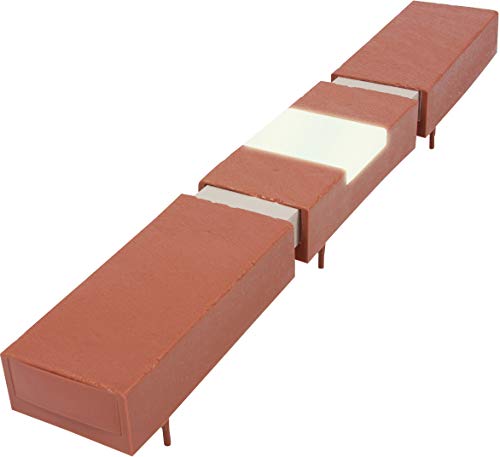
| Concrete Paver Edging Border | Formal beds and permanent walkways | Very long lasting and stable |
| Natural Stone Edging | Cottage and rustic gardens | Blends with the landscape |
| Brick Edging | Traditional, classic look | Strong, timeless appearance |
| Living Edging with Liriope or Dwarf Boxwood | Low-maintenance, naturally tidy borders | Grows into a living border |
Rubber Flexible Landscape Edging
This flexible rubber edging suits gardeners with curving, free-form beds who want a clean edge without cutting or mortaring. It is often the easiest option for a first installation, and it tolerates the freeze-thaw cycles common in northern yards better than rigid materials.
Key specs
- Typical height above grade: 4 to 6 inches, with an additional 6 to 8 inches buried
- Commonly sold in 20-foot to 40-foot lengths with stake kits
- Made from recycled rubber or EPDM-type compounds, according to most manufacturers
Pros
- Bends into tight curves that rigid materials cannot follow
- Installs with a trench, a rubber mallet and stakes
- Does not rust, rot or crack under normal freeze-thaw cycles
Cons
- Can shift or heave if the trench is too shallow or the soil is not tamped
- Some owners report the color fades to a lighter tone after several seasons in strong sun
View on Amazon: View on Amazon
Steel Landscape Edging (Gardener’s Supply style 5-inch steel strip)
Steel edging is a strong choice for gardeners who want crisp, straight lines and a barrier that holds up to frequent mowing. It works well for long borders along lawns and driveways, and it can be shaped into gentle curves with careful bending.
Key specs
- Common height: 4 to 5 inches above grade
- Typical thickness: around 1/8 inch for the most common residential strips
- Coated or galvanized finishes are standard for rust resistance
Pros
- Holds a sharp, defined line that mowers and string trimmers can follow
- Stays rigid and does not sag between stakes
- Long service life when properly coated
Cons
- Sharp edges can cause scrapes during installation, so wear gloves
- Tight curves require pre-bending, and sharp bends can kink the metal
View on Amazon: View on Amazon
Aluminum Landscape Edging
Aluminum edging is a good match for gardeners with long straight runs who want something lighter than steel and completely rust-proof. It is easy to handle during installation and works well in coastal or humid areas where steel may corrode over time.
Key specs
- Common height: 4 to 6 inches above grade
- Lighter than steel of similar dimensions
- Often sold with stakes and connectors for straight runs
Pros
- Will not rust, making it suitable for wet or salty climates
- Lightweight and easy to cut with a hacksaw or tin snips
- Straight, clean lines for formal or modern designs
Cons
- Thin profiles can bend if struck by a mower or heavy foot pressure
- Less effective than steel for very heavy root pressure from aggressive grasses
View on Amazon: View on Amazon
Plastic Lawn Edging Roll (Paver Edging style)
Plastic roll edging is a practical budget pick for temporary beds, seasonal annual gardens, or areas you may redesign in a year or two. It is quick to set up and easy to cut to length, though it is not the most durable choice for permanent borders.
Key specs
- Common height: around 4 inches above grade
- Sold in rolls of 10 to 40 feet, depending on the brand
- Usually made from recycled polyethylene or similar plastics
Pros
- Inexpensive per foot compared with stone or metal options
- Easy to cut with pruning shears or a utility knife
- Flexible enough for gentle curves without special tools
Cons
- Can become brittle and crack after several winters in cold climates
- Thin material may not resist root pressure from grass runners as well as metal
View on Amazon: View on Amazon
Concrete Paver Edging Border
Concrete paver edging is a durable, formal option for gardeners who want a permanent, level border with a neat, architectural look. It works especially well alongside walkways, where the pavers can double as a stable step or path boundary.
Key specs
- Typical paver dimensions: around 4 inches wide by 8 inches long, or similar
- Installed on a compacted base of crushed stone for stability
- Available in multiple colors and finishes from most masonry suppliers
Pros
- Very long lasting when installed on a proper base
- Creates a level, stable edge that resists frost heave when set correctly
- Works well with straight and gently curved layouts
Cons
- Installation requires leveling, compacting and some physical labor
- Difficult to move or reposition once set
View on Amazon: View on Amazon
Natural Stone Edging
Natural stone edging suits cottage, rock, and woodland gardens where a softer, more organic look is the goal. Flagstone, fieldstone, and river rock all work, and each adds a different texture to the bed.
Key specs
- Stones are commonly set 2 to 4 inches above grade
- Stone thickness varies, so mixing sizes is typical for a natural look
- Bedding in soil or sand keeps stones stable over time
Pros
- Blends naturally with native landscapes and hardscape features
- Extremely durable and resistant to weather
- Can be arranged in irregular, flowing shapes
Cons
- Heavy, so moving and placing stones takes time and effort
- Uneven heights can make mowing around the edge more difficult
View on Amazon: View on Amazon
Brick Edging
Brick edging offers a classic, traditional border that suits colonial-style gardens and older homes. Laid in a single or double row, it creates a firm, defined boundary that can last for decades when set on a sound base.
Key specs
- Standard brick dimensions: roughly 2-1/4 by 3-3/4 by 8 inches
- Typically set on sand or a thin gravel base
- Can be laid flat, on edge, or in a herringbone or running bond pattern
Pros
- Timeless appearance that suits many home styles
- Strong, weather-resistant material with a long working life
- Easy to repair by replacing individual bricks
Cons
- Bricks can heave or shift if not set on an adequate base
- Curves require cutting bricks, which adds labor
View on Amazon: View on Amazon
Living Edging with Liriope or Dwarf Boxwood
Living edging uses low, dense plants to create a border that grows with the garden. It is well suited to gardeners who prefer a softer, more natural transition and are willing to trim the plants periodically. Liriope (lilyturf) and dwarf boxwood are two common choices in many regions, though suitability depends on your hardiness zone.
Key specs
- Liriope muscari typically grows 12 to 18 inches tall and spreads by rhizomes
- Dwarf boxwood varieties are usually kept under 3 feet and can be sheared to a low hedge
- Spacing for a continuous border is often 8 to 12 inches for liriope and 18 to 24 inches for dwarf boxwood, depending on the variety
Pros
- Creates a living border that looks natural and blends into the bed
- Requires no hardware and can be divided to extend the border
- Helps reduce weeds along the bed edge once established
Cons
- Takes one or more seasons to fill in and form a solid line
- Can spread into lawns if not kept in check, especially liriope
View on Amazon: View on Amazon
Buying Guide
Choosing flower garden edging ideas is easier when you know what to look for. The guidance below covers the criteria that matter most and how to match them to your garden.
Selection criteria
Start with the job you need the edging to do. A barrier that keeps grass out of beds needs to be buried at least 4 to 6 inches deep, while a decorative border only needs to define a shape. Consider whether the edge will be mowed over, how tight your curves are, and whether you plan to change the layout later. Permanent materials like stone, brick and concrete cost more upfront but rarely need replacing, while flexible or plastic options are better for seasonal changes.
Important features
- Depth below grade: Root barriers work best with at least 4 inches buried.
- Height above grade: 3 to 5 inches is typical for holding mulch and soil.
- Flexibility: Choose flexible materials for curves and rigid materials for straight lines.
- Corrosion resistance: Look for coated steel or aluminum in damp or coastal areas.
- Mower compatibility: A low, firm edge lets mower wheels ride along it without damage.
Specs to check
Before buying, check the stated height, buried depth, material thickness and length per package. For metal edging, look at the gauge or thickness and the coating type. For stone and masonry, confirm the unit dimensions so you can calculate how many pieces you need. For living edging, check the mature height and spread for your region.
Choosing by need
- Curved beds: Rubber flexible edging or living edging.
- Straight, crisp lines: Steel or aluminum edging.
- Permanent, formal borders: Concrete pavers or brick.
- Natural or cottage look: Natural stone or living edging.
- Temporary or budget beds: Plastic roll edging.
Things to watch out for
- Shallow installation, which lets grass roots and mulch slip underneath
- Poor base preparation, which causes masonry and stone to heave or sink
- Sharp metal edges, which can cause cuts if not handled with gloves
- Living edging that spreads into the lawn if not trimmed regularly
- Mixing materials in ways that create uneven heights and gaps
For soil-related questions that affect how deep you can install edging, such as clay that holds water or sandy ground that shifts, see Understanding Clay, Sandy, and Loam Soil for Your Garden. If you are also planning the layout of your beds, Simple Garden Layout and Design Ideas for Beginners offers useful starting points. Gardeners concerned about mulch washing out of beds may find Organic Methods for Effective Garden Weed Control helpful, since a good edge and weed control go hand in hand.
FAQ
What is the best edging for keeping grass out of flower beds?
Steel, aluminum and rubber edging perform well when buried at least 4 to 6 inches deep. Steel is the most rigid and resists root pressure well, while rubber works best for curved beds. Shallow installations of any material allow grass runners to pass underneath.
How deep should flower garden edging be installed?
For most barrier materials, aim for 4 to 6 inches buried, with 3 to 5 inches showing above grade. This depth stops grass rhizomes and helps retain mulch. Masonry edging should be set on a compacted base rather than simply pushed into soil.
Can I install edging around curves?
Yes. Flexible rubber edging and living edging handle curves most easily. Steel can be bent gradually, but sharp bends may kink it. Brick and paver edging can follow curves, though it requires cutting pieces to fit the arc.
Is plastic edging a good long-term choice?
Plastic roll edging works well for temporary or seasonal beds. In cold climates it can become brittle over several winters and may not resist root pressure as firmly as metal or masonry. For permanent beds, a more durable material is usually the better investment.
Do I need a base under brick or paver edging?
Yes. A compacted base of crushed stone or sand helps prevent heaving and shifting, especially in areas with freeze-thaw cycles. Skipping this step is one of the most common causes of uneven or sinking edging.
Will living edging spread into my lawn?
It can, depending on the plant. Liriope spreads through rhizomes and benefits from periodic division and trimming to stay within its line. Dwarf boxwood grows more slowly and stays in place more easily. Check the mature spread for your chosen variety before planting.
When is the best time to install flower garden edging?
Spring and early fall are generally ideal, when the soil is workable and temperatures are moderate. Avoid installing during saturated or frozen soil conditions, as it is harder to achieve a stable, level trench and compacted base.
Conclusion
The best flower garden edging depends on how you garden and what you want the border to do. For curved beds and easy installation, flexible rubber edging is a practical first choice. Steel and aluminum suit straight, crisp lines, with aluminum preferred where rust is a concern. Concrete pavers and brick make sense for permanent, formal borders, while natural stone fits cottage and rustic gardens. Plastic roll edging serves temporary or budget beds, and living edging with liriope or dwarf boxwood offers a low-maintenance, naturally tidy look that improves over time. Whatever you choose, install it deep enough to block roots, prepare a stable base for masonry, and check local regulations or utility lines before digging. For structural or drainage concerns on larger projects, consult a landscape professional.