
 By Claire Whitaker
Updated November 2026
Finding a good trellis for indoor plants makes a real difference once a vine starts reaching for the ceiling. Pothos, philodendron, monstera and hoya all climb in nature, and without something to grab onto they sprawl, drop leaves and lose the bold, mature foliage that makes them attractive. The right support keeps stems upright, gives aerial roots something to cling to and fits the scale of your pot. For this list we looked at build material, height range, stability in a pot, how the support is attached, and what owners commonly report about durability and ease of adjustment. We did not test these products ourselves; the picks reflect manufacturer specifications and patterns in owner feedback.
Our top picks at a glance
- 1
 TOP CHOICEBest overall30'' Large Metal Plant Trellis for Climbing Plants, Tall Plant SupportView on Amazon
- 2
 TOP CHOICEBest for small kitchens and compact shelves4 Packs Trellis for Climbing Plants Indoor, HENABLE Small Garden MetalView on Amazon
- 3
 TOP CHOICEBest for aerial roots4 Pack Moss Pole Monstera Plant Support, Bendable Plant Stakes Made of Real Coco CoirView on Amazon
- 4
 Best for tall, heavy plants32.6in Plant Trellis for Climbing Plants Indoor Outdoor, Expandable LaView on Amazon
- 5
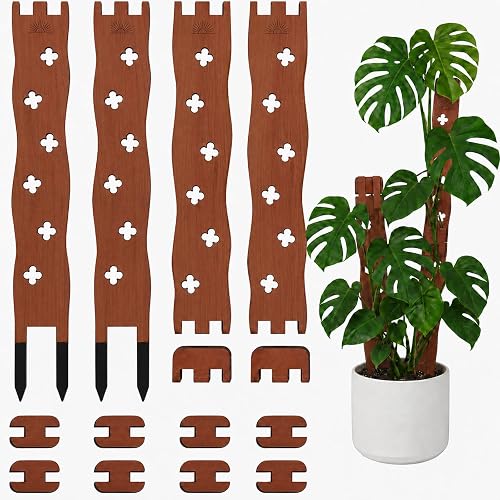 Best budget pickMoss Pole Alternative for Small Potted Pothos, Hoya, Philodendron & YoView on Amazon
Our Top Picks
| Product | Best for | Key feature |
|---|---|---|
| Large Metal Plant Trellis, 30 inch (2 pack) | Overall use with pothos and ivy | Tall metal frame with a decorative profile |
| HENABLE Small Garden Metal Trellis (4 pack) | Small kitchens and compact shelves | Four different iron patterns in one set |
| Moss Pole Monstera Plant Support (4 pack) | Monstera and aerial-rooting vines | Coco coir surface that aerial roots can grip |
| Expandable Large Metal Garden Trellis (2 pack) | Tall, heavy climbers | Adjustable width and heavy-duty steel build |
| Moss Pole Alternative with Red Cedar Extensions (2 pack) | Small pots and young plants | Extendable red cedar sections |
Large Metal Plant Trellis for Climbing Plants, Tall Plant Support for Indoor & Outdoor Use (2 Pack)
30'' Large Metal Plant Trellis for Climbing Plants, Tall Plant Support for Indoor & Outdoor Use, Modern Decorative Trellis for Potted Plants (2 Pack)
Best for: Overall use with pothos and ivy
This is a good starting point for someone with one or two climbing plants in medium pots who wants a support that looks finished in a living room. It is sized for plants that have outgrown a short stake and need height.
Key specs
- Listed height: 30 inches
- Sold as a 2 pack
- Metal construction with a decorative grid design
- Listed for both indoor and outdoor use
Pros
- Height suits pothos and ivy that have grown past a basic stake
- Open grid lets vines weave through without tight wrapping
- Two units make it easy to support a pair of pots or one wider planter
Cons
- Thin wire can bend if a heavy vine is pulled sideways
- Shorter than some options for large monstera
Bottom line: A strong all-around choice for shoppers who want an attractive, versatile metal trellis for mid-sized climbers.
4 Packs Trellis for Climbing Plants Indoor, HENABLE Small Garden Metal Trellis for Potted Plants
4 Packs Trellis for Climbing Plants Indoor, HENABLE Small Garden Metal Trellis for Potted Plants Outdoor for Vine Ivy Flower Plant Support, 4 Different Black Iron Patterns
Best for: Small kitchens and compact shelves
Suited to people with limited floor and shelf space who want several small supports for herbs, ivy or small hoya. The four-pattern set lets you vary the look across pots.
Key specs
- Sold as a 4 pack
- Black iron finish
- Four different decorative patterns included
- Designed for small garden and potted use
Pros
- Mixing patterns makes it easy to decorate several pots at once
- Compact footprint fits narrow windowsills and kitchen counters
- Good value for trying trellises on multiple plants
Cons
- Small size is not ideal for vines past about two feet
- Light iron can rust over time if it stays damp
Bottom line: Best for shoppers with several small climbers and not much room. Pick it when footprint matters more than height.
4 Pack Moss Pole Monstera Plant Support, Bendable Plant Stakes Made of Real Coco Coir
4 Pack Moss Pole Monstera Plant Support, 2 Pack 28" & 2 Pack 48" Bendable Plant Stakes Made of Real Coco Coir Support for Climbing Indoor Plants, Tall Moss Stick Trellis for Pothos & Philodendron
Best for: Monstera and aerial-rooting vines
Monstera and philodendron send aerial roots that grab textured surfaces. A coir pole gives those roots something to anchor into, which often leads to larger, more mature leaves than a bare stake.
Key specs
- Sizes listed as 28 inch and 48 inch
- Sold as a 4 pack (two of each length)
- Real coco coir surface
- Bendable core for shaping
Pros
- Coir surface holds aerial roots well
- Two lengths cover young and mature plants
- Bendable core lets you curve the pole to fit the pot
Cons
- Coir needs occasional misting to stay moist and grippy
- Can deteriorate in a pot that stays soggy
Bottom line: The most fitting choice for monstera owners. Plan on keeping the coir damp and the pot draining well.
32.6in Plant Trellis for Climbing Plants Indoor Outdoor, Expandable Large Metal Garden Trellis for Potted Plants
32.6in Plant Trellis for Climbing Plants Indoor Outdoor, Expandable Large Metal Garden Trellis for Potted Plants, Heavy-Duty Tall Pothos Plant Climber Support for Ivy Pothos Hoya Monstera, 2P
Best for: Tall, heavy climbers
For mature hoya, large pothos or a heavy ivy that has outgrown lighter supports, this expandable steel trellis offers more height and a sturdier frame.
Key specs
- Listed height: about 32.6 inches
- Expandable width
- Heavy-duty metal construction
- Sold as a 2 pack
Pros
- Sturdier frame handles heavier vines
- Expandable design adapts to different pot widths
- Good height for trailing and climbing growth
Cons
- Bulkier look may not suit minimalist decor
- Needs a heavier pot to stay upright with a full vine
Bottom line: Pick this when your plant is large and heavy and a lighter trellis keeps tipping.
Moss Pole Alternative for Small Potted Pothos, Hoya, Philodendron & Young Monstera (2 Pack)
Moss Pole Alternative for Small Potted Pothos, Hoya, Philodendron & Young Monstera. Includes 2 Bases & 2 Extensions Extendable Red Cedar Plant Trellis for Indoor Climbing Plants, 2 Pack
Best for: Small pots and young plants
A good fit for a young pothos or hoya that is just starting to climb. The extendable red cedar sections let you grow the pole as the plant matures.
Key specs
- Sold as a 2 pack
- Includes 2 bases and 2 extensions
- Red cedar construction
- Extendable design
Pros
- Extensions let the pole grow with the plant
- Natural wood look blends with most decor
- Base design suits smaller containers
Cons
- Joints between sections can loosen over time
- Not sturdy enough for large, heavy monstera
Bottom line: Best for young plants in small pots where a growing, natural-looking pole is the goal.
Buying Guide
Support Type: Moss Pole Versus Open Trellis
Moss poles and coir sticks suit aerial-rooting plants like monstera and philodendron, because the roots can grip the surface. Open metal or wire trellises suit vines that climb by tendrils or that you plan to train through a grid, such as ivy and some pothos. Decide which growth habit your plant has before buying.
Good picks for this: Moss Pole Monstera Plant Support, Moss Pole Alternative with Red Cedar Extensions
Height and Growth Potential
Measure your plant’s current height and estimate how far it will grow in the next year. Choose a support that reaches at least that height, or one that extends. Extensions and expandable designs help if you want the support to keep pace with growth.
Good picks for this: Expandable Large Metal Garden Trellis, Large Metal Plant Trellis
Pot Size and Stability
A tall support in a light pot can tip, especially once a vine is heavy with leaves. Match the trellis to the pot. In a small pot, a short or narrow support is safer. For a tall trellis, use a heavier planter or a base that spreads the weight.
Good picks for this: HENABLE Small Garden Metal Trellis, Moss Pole Alternative with Red Cedar Extensions
Material and Durability
Metal resists bending over the long term and suits heavier plants, but it can rust if the finish is damaged and the pot stays wet. Coir and cedar look natural and grip roots well, but they break down faster if kept soggy. Check that drainage holes are clear and that the pot is not waterlogged.
Good picks for this: Expandable Large Metal Garden Trellis, Moss Pole Monstera Plant Support
Ease of Attachment
Look at how the trellis sits in the pot. Some insert directly into soil; others have a base or need to be anchored. Plan to tie stems loosely with soft plant ties or twine, which leaves room for stem growth and avoids cutting into the plant.
Good picks for this: Large Metal Plant Trellis, Moss Pole Alternative with Red Cedar Extensions
Aesthetics and Placement
Your trellis is visible, so consider finish and shape. Black iron suits modern rooms; wood and coir look warmer. If the plant sits in a corner or on a shelf, a narrow profile keeps the look tidy.
Good picks for this: HENABLE Small Garden Metal Trellis, Large Metal Plant Trellis
Care and Maintenance
Coir benefits from light misting every few days, while metal needs only occasional wiping and checking for rust. Re-tie stems every few weeks as they grow, and check the base of the support for loosening after watering.
Good picks for this: Moss Pole Monstera Plant Support, Expandable Large Metal Garden Trellis
FAQ
Do indoor plants really need a trellis?
Not always, but climbing plants grow more naturally with one. Without support, vines like pothos and philodendron tend to trail, which is fine for a hanging basket but leaves an upright plant looking loose. A trellis helps stems grow upward and gives aerial roots something to grip.
What is the difference between a moss pole and a trellis?
A moss pole is usually a coir or moss-covered stick that aerial roots can attach to. A trellis is typically an open frame, often metal, that stems weave through or are tied onto. Moss poles suit monstera and philodendron best; trellises suit many vining plants that climb by tendrils or grow through a grid.
How do I attach a plant to an indoor trellis?
Use soft plant ties, twist ties or strips of cloth. Loop them loosely around the stem and the support, leaving room for the stem to thicken. Re-check every few weeks, since stems grow quickly during the growing season. Avoid wire that can cut into soft growth.
How tall should an indoor trellis be?
Choose a height at least as tall as the plant’s current climbing stems, with room to grow. For a young plant, 24 to 30 inches is often enough for the first season. Mature monstera or large hoya may need more height or an extension.
Can I use a trellis outdoors as well?
Some indoor trellises are rated for both indoor and outdoor use, especially metal designs. Outdoor exposure to rain and sun can shorten the life of coir and natural wood, so check the manufacturer’s listing before moving a support outside.
Why are my aerial roots not attaching to the pole?
The surface may be too dry. Coir and moss need consistent moisture for roots to grip. Mist the pole every few days and gently press aerial roots against it. Be patient; attachment can take several weeks.
How do I know if my trellis is too small?
If stems are flopping over the rim of the pot, sprawling sideways or pulling the support leaning, it is likely too small or too light. Upgrade to a taller or sturdier design, and consider a heavier pot for stability.
Conclusion
For most people with pothos, ivy or a mixed set of climbers, the Large Metal Plant Trellis is a versatile starting point. Monstera owners who want aerial roots to anchor should look at the Moss Pole Monstera Plant Support. Heavy, mature plants call for the Expandable Large Metal Garden Trellis, while small kitchens do well with the HENABLE set. For young plants in small pots, the Moss Pole Alternative with red cedar extensions offers room to grow. Match the support to growth habit, height and pot stability, and check ties regularly. For persistent problems with leaf drop or stunted growth, see How to Diagnose and Fix Common Indoor Plant Issues and Understanding Light Levels for Healthy Indoor Plants.
Related reading: Tropical Plants for Indoor Use: 9 Picks That Thrive in Your Home, Money Tree Indoor Plants: A Step-by-Step Care Guide for Beginners, Low Light Indoor Plants: 12 Easy Picks That Thrive Without Sun.
Sources
- University-based guidance on houseplant growth, light and support needs (extension.org)
- Safety guidance on working with tools and equipment around the home (osha.gov)
- Consumer safety information on home products and furniture stability (cpsc.gov)
About Claire Whitaker
Claire Whitaker is part of our editorial team and reviews and edits our plant care Q&A guides, checking product details against manufacturer specifications and owner feedback.




