 By Claire Whitaker
Updated November 2026
Choosing plant fertilizer for indoor plants sounds simple until you stand in front of a shelf of liquids, spikes and granules, each promising bigger leaves and faster growth. Houseplants have different needs than garden plants: their roots sit in a small volume of potting mix, they get less light, and they can’t flush out excess salts with rainwater. That makes the choice of product and the feeding schedule matter more. The five picks below were compared on formula type, nutrient balance, ease of dosing, suitability for a wide range of houseplants and the general patterns owners report, rather than on any hands-on trials. Each one suits a slightly different situation, so the goal is to match the product to how you actually care for your plants.
Our top picks at a glance
- 1
 TOP CHOICEBest overallMiracle-Gro Water Soluble All Purpose Plant Food, 1.5 lbView on Amazon
- 2
 TOP CHOICEBest for new growthKelp-Enriched Liquid Concentrate Indoor Plant Food, 8 ozView on Amazon
- 3
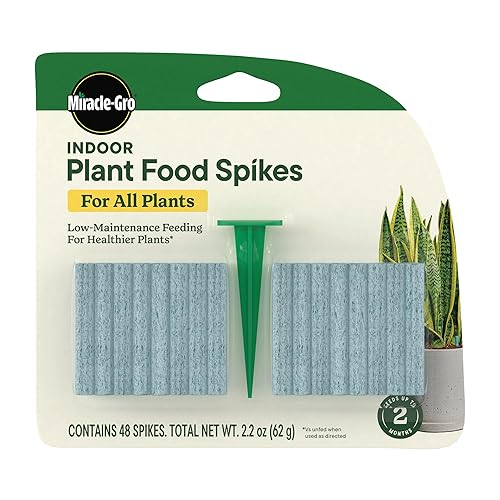 TOP CHOICEBest for no-mess feedingMiracle-Gro Indoor Plant Food Spikes, 48 SpikesView on Amazon
- 4
 Best organic optionOrganic Liquid Indoor Plant Food 5-5-5 with Sea Kelp, 8 ozView on Amazon
- 5
 Best budget pickPurived 16oz All-Purpose Liquid Plant FertilizerView on Amazon
Our Top Picks
Quick Comparison
| Product | Best for | Key feature |
|---|---|---|
| Miracle-Gro Water Soluble All Purpose Plant Food, 1.5 lb | General all-round feeding | Water-soluble powder, mixed into water |
| Kelp-Enriched Liquid Concentrate Indoor Plant Food, 8 oz | Encouraging new growth | Kelp extract in a gentle weekly formula |
| Miracle-Gro Indoor Plant Food Spikes, 48 Spikes | Busy owners who forget to feed | Push-in spikes, no mixing |
| Organic Liquid Indoor Plant Food 5-5-5, 8 oz | Organic-minded growers | Sea kelp base, 5-5-5 balanced ratio |
| Purived All-Purpose Liquid Plant Fertilizer, 16 oz | Large collections and frequent feeding | Concentrate that makes about 50 gallons |
Miracle-Gro Water Soluble All Purpose Plant Food, 1.5 lb
Fertilizer for All Indoor or Outdoor Plants including Roses, Flowers, Vegetables, Houseplants, Trees, and Shrubs Miracle-Gro Water Soluble All Purpose Plant Food, 1.5 lb.
Best for: General all-round feeding of a mixed collection of houseplants
This is a classic water-soluble powder for owners who want one product that covers flowering houseplants, foliage plants and trees. It works well for someone who already waters on a regular schedule and wants to add nutrients to that routine without buying separate products.
Key specs
- Format: water-soluble powder, dissolved in water
- Labeled for indoor and outdoor plants, including houseplants
- Package size: 1.5 lb
Pros
- Easy to adjust strength, so you can feed lightly or more heavily
- Broad label covers many plant types in one bottle
- Widely available and familiar to most owners
Cons
- Powder must be measured and mixed each time, which takes some care
- Strong mixes can build salt residue in pots if used too often
Bottom line: A sound default for owners with a varied collection who are comfortable mixing their own feed.
Kelp-Enriched Liquid Concentrate Indoor Plant Food, 8 oz
Encourages New Growth, Kelp-Enriched Formula, Liquid Concentrate, Gentle for Weekly Feeding, All Indoor Plant Varieties Indoor Plant Food, Complete Liquid Fertilizer for Houseplants, 8oz
Best for: Encouraging new growth in indoor plants during the active season
This liquid concentrate is aimed at owners who want a gentle, regular feed that supports leaf and stem development. The kelp base is a common choice for owners who prefer a milder, plant-derived formula over harsher synthetic blends.
Key specs
- Format: liquid concentrate, diluted before use
- Kelp-enriched formula labeled for all indoor plant varieties
- Package size: 8 oz
Pros
- Gentle enough for weekly feeding according to the label
- Liquid form blends easily into watering routines
- Suits a wide range of houseplant types
Cons
- Concentrate needs careful dilution to avoid overfeeding
- Smaller bottle may run out quickly for large collections
Bottom line: A good match for owners who want steady, gentle growth support and feed every week during spring and summer.
Miracle-Gro Indoor Plant Food Spikes, 48 Spikes
Fertilizer Spikes for Houseplants, Flowers, Vegetables, and Herbs Miracle-Gro Indoor Plant Food Spikes for All Plants, 48 Spikes
Best for: Busy owners who tend to forget regular feeding
Spikes take the measuring out of fertilizing. You push one into the potting mix and it releases nutrients over time as you water. This suits people with many pots and limited time, or those who travel and need a feeding method that runs on its own.
Key specs
- Format: solid spikes pushed into soil
- Labeled for houseplants, flowers, vegetables and herbs
- Count: 48 spikes
Pros
- No mixing or measuring; one spike per pot is the usual approach
- Good for owners who feed inconsistently
- Clean to use, with no spills
Cons
- Nutrient release is harder to adjust for a specific plant
- Spikes can concentrate in one spot, so placement matters
Bottom line: The simplest route for owners who want low effort, as long as they accept less control over strength.
Organic Liquid Indoor Plant Food 5-5-5 with Sea Kelp, 8 oz
Organic Liquid Indoor Plant Food, Houseplant, Tropical & All-Purpose Indoor Plant Fertilizer, Organic Liquid Fertilizer 5-5-5 with Sea Kelp, 8oz Treats 50 Gallons
Best for: Owners who want an organic, balanced liquid for tropical and general houseplants
This liquid uses a balanced 5-5-5 ratio, meaning equal parts nitrogen, phosphorus and potassium, with a sea kelp base. It appeals to owners who prefer organic inputs and want a feed that is easy to add to regular watering.
Key specs
- Nutrient ratio: 5-5-5 (N-P-K)
- Organic liquid with sea kelp
- Package size: 8 oz
Pros
- Balanced ratio suits many tropical and foliage houseplants
- Organic positioning appeals to organic-minded growers
- Liquid is quick to add to watering
Cons
- Organic formulas can act more slowly than synthetic ones
- Small bottle means frequent repurchasing for larger collections
Bottom line: A strong choice for organic-focused owners with tropical or foliage plants that need steady feeding.
Purived 16oz All-Purpose Liquid Plant Fertilizer
Purived 16oz All-Purpose Liquid Plant Fertilizer – Makes 50 Gallons, for Indoor Houseplants, All-Natural, Groundwater Safe, Made in USA
Best for: Large collections where a concentrate that goes a long way makes sense
This concentrate is labeled to make about 50 gallons of diluted feed, which suits owners with many plants or those who feed often. The product is marketed as all-natural and groundwater safe, and it is labeled for indoor houseplants.
Key specs
- Format: liquid concentrate, diluted before use
- Labeled to make about 50 gallons
- Package size: 16 oz, made in the USA per the listing
Pros
- Concentrate is economical per use for large collections
- Labeled all-natural and groundwater safe
- Suits frequent feeding schedules
Cons
- Requires accurate dilution, and mistakes are easy to make
- Owners with only a few plants may not use the full bottle
Bottom line: Best for owners with a larger houseplant collection who want a concentrate and are careful with dilution.
Buying Guide
Fertilizer form: liquid, powder, or spikes
Liquids and water-soluble powders are fast-acting and easy to adjust, since you control the strength with every watering. Spikes release slowly and require no mixing. Choose the form that matches how often you will feed and how much control you want.
Good picks for this: Miracle-Gro Water Soluble All Purpose Plant Food, Miracle-Gro Indoor Plant Food Spikes
Nutrient ratio (N-P-K)
The three numbers on a label show the share of nitrogen, phosphorus and potassium. Nitrogen supports leafy growth, phosphorus supports roots and flowering, and potassium supports overall plant health. A balanced ratio such as 5-5-5 suits most general houseplants, while a leafy plant may do well with a slightly higher nitrogen share.
Good picks for this: Organic Liquid Indoor Plant Food 5-5-5, Kelp-Enriched Liquid Concentrate Indoor Plant Food
Formula type: synthetic or organic
Synthetic formulas release nutrients in a predictable, fast way. Organic formulas rely on plant or animal-derived materials that break down more slowly. Organic options may suit owners who want to avoid synthetic inputs, though they may take longer to show results.
Good picks for this: Organic Liquid Indoor Plant Food 5-5-5, Purived All-Purpose Liquid Plant Fertilizer
Concentration and dilution
Concentrates offer better value for large collections but demand accurate mixing. Ready-to-use or lightly concentrated feeds reduce the risk of overfeeding. Always read the dilution instructions and start with a weaker mix than you think you need, especially for plants that are stressed or recently repotted.
Good picks for this: Purived All-Purpose Liquid Plant Fertilizer, Kelp-Enriched Liquid Concentrate Indoor Plant Food
Plant type and range
Check the label for which plants it is intended for. Some products are labeled for all houseplants, while others focus on flowering or foliage types. A product that lists a wide range of plant types gives you flexibility if your collection changes over time.
Good picks for this: Miracle-Gro Water Soluble All Purpose Plant Food, Miracle-Gro Indoor Plant Food Spikes
Ease of use and feeding routine
Think honestly about how often you water and whether you will remember to feed. Spikes suit irregular routines, while liquids fit neatly into a weekly watering habit. The best fertilizer is one you will use consistently at the label rate.
Good picks for this: Miracle-Gro Indoor Plant Food Spikes, Kelp-Enriched Liquid Concentrate Indoor Plant Food
Package size and storage
Estimate how many plants you have and how often you feed. A small bottle works for a handful of pots, while a concentrate suits a larger group. Store liquids and powders in a cool, dry place with the cap tightly closed, and keep all plant food away from children and pets.
Good picks for this: Purived All-Purpose Liquid Plant Fertilizer, Miracle-Gro Water Soluble All Purpose Plant Food
FAQ
How often should I fertilize indoor plants?
Most houseplants need feeding every two to four weeks during spring and summer, when they are actively growing. Reduce or stop feeding in fall and winter, when growth slows and light levels drop. Always follow the rate on the label, since plants in low light need less.
Can I use outdoor fertilizer on houseplants?
Many all-purpose products are labeled for both indoor and outdoor use, and they can work for houseplants at a reduced strength. Avoid products made for lawns or heavy feeders, since they may be too strong for container plants in a small volume of soil.
What are signs I am over-fertilizing?
Common signs include brown leaf tips, crusty white or brown residue on the soil or pot rim, wilting despite moist soil, and sudden leaf drop. If you notice these, flush the pot with plain water and skip feeding until new growth appears.
Do indoor plants need fertilizer at all?
Potting mix holds a limited supply of nutrients, and watering gradually washes them out. Over time, plants can become pale or slow to grow without feeding. Fertilizer supports growth, though a healthy plant in good light with fresh potting mix may need less than an older one.
Should I fertilize a newly repotted plant?
Wait several weeks after repotting before feeding. Fresh potting mix often contains some starter nutrients, and the roots need time to settle. Feeding too early can stress the plant, so hold off until you see new growth.
Is organic fertilizer better for houseplants?
Neither type is automatically better. Organic formulas tend to release nutrients more slowly and may suit owners who prefer natural inputs. Synthetic formulas give more predictable, faster results. The right choice depends on your priorities and how closely you monitor your plants.
Conclusion
For most owners, Miracle-Gro Water Soluble All Purpose Plant Food is a sensible starting point because it covers a wide range of plants and is easy to adjust. If you want gentle, regular growth support, the kelp-enriched liquid concentrate fits that role. Owners who forget to feed will find the spikes the least demanding route. Organic-minded growers should look at the 5-5-5 organic liquid, and those with a large collection may get the most value from the Purived concentrate, provided they dilute carefully. Whichever you choose, start with a lighter mix than the label suggests and watch your plants closely.
Sources
- Research-based guidance on fertilizing container and houseplants from land-grant university extension programs (extension.org)
- Information on safe handling, storage and disposal of fertilizers and pesticide-related products (epa.gov)
- Extension publications on soil nutrients, fertilizer rates and plant nutrition basics (aces.edu)
Related reading
- Best Fertilizer for Indoor Plants
- Understanding Light Levels for Healthy Indoor Plants
- Tropical Plants for Indoor Use: 9 Picks That Thrive in Your Home
- Tropical Indoor House Plants: A Step-by-Step Guide to Thriving Greenery
- Trellises for Indoor Plants: 7 Steps to Support Climbing Houseplants
About Claire Whitaker
Claire Whitaker is part of our editorial team and reviews and edits our plant care Q&A guides, checking product details against manufacturer specifications and owner feedback.